Forensic Accounting

Case Study: Financial Litigation Support – Quantifying Economic Damages from a Data Center Fire

Executive Summary:

In March 2025, TechPro Systems, Inc., a SaaS provider, experienced a catastrophic fire at its primary data center. The incident caused extended service outages, significant operational downtime, and the loss of several key clients. Lakelet Advisory Group, LLC was retained to assess and quantify the resulting economic damages, including lost profits, client attrition, and associated mitigation costs. Following a detailed financial analysis, our team concluded that the total damages sustained amounted to approximately $16.2 million.

Background:

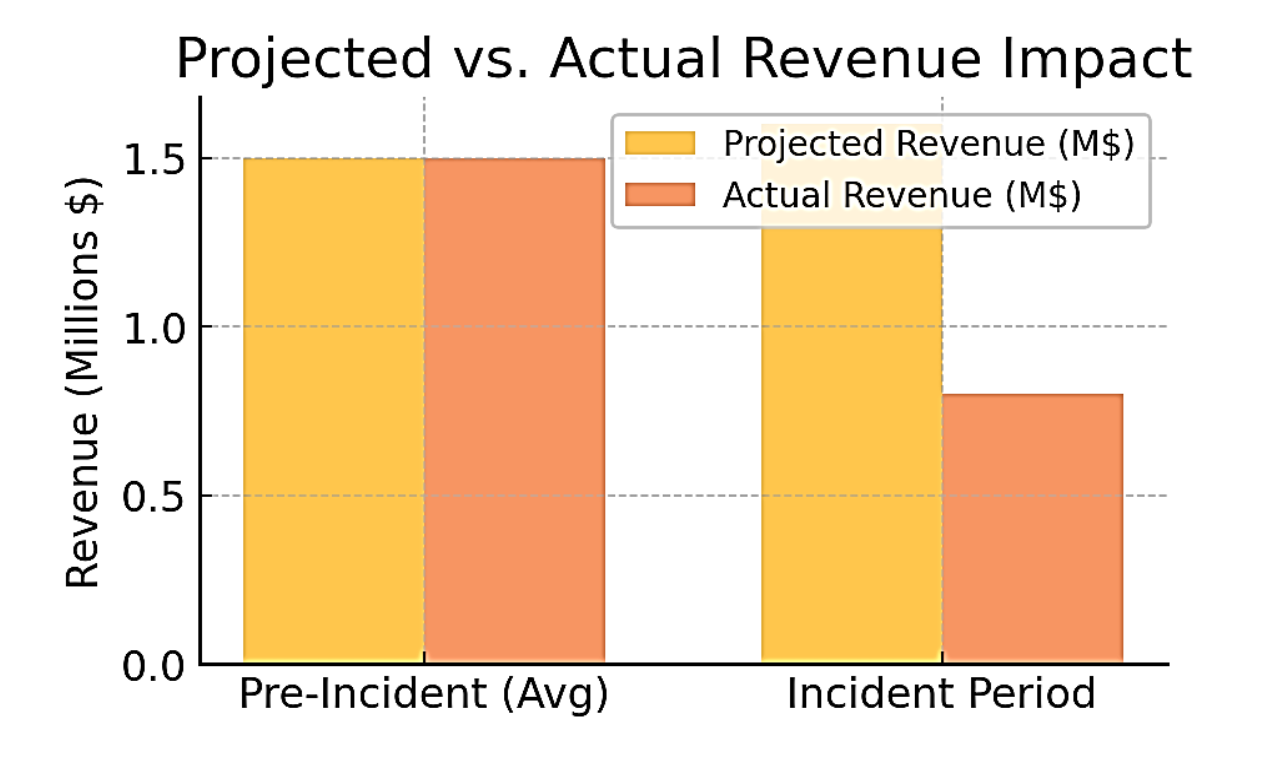
The fire resulted in a 17-day full outage, followed by 45 days of partial operations. The company lost key clients and experienced reputational damage, leading to the abandonment of $4.8 million in new contracts.

Scope of Engagement:

TechPro Systems, Inc. endured a prolonged operational disruption following the data center fire, with 17 days of complete outage and an additional 45 days of limited-service capacity. The prolonged instability resulted in approximately 15% client attrition, significantly impacting recurring revenue. Compounding the loss, the company forfeited $4.8 million in new business from abandoned contracts during the recovery period. In parallel, TechPro incurred $2.1 million in incremental expenses, including temporary server deployments, recovery operations, and customer compensation credits. Over a projected 12-month period, the cumulative impact of these disruptions led to an estimated $9.3 million in lost profits.

Key Methodologies:

  • But-for Financial Model using 2021–2023 performance as a baseline.

  • Customer Churn Analysis using historical churn data and client interviews.

  • Business Interruption Framework aligned with AICPA Practice Aid.

  • Discounting Future Losses using a 10% risk-adjusted discount rate.

Findings:

The total economic damages were quantified as follows:

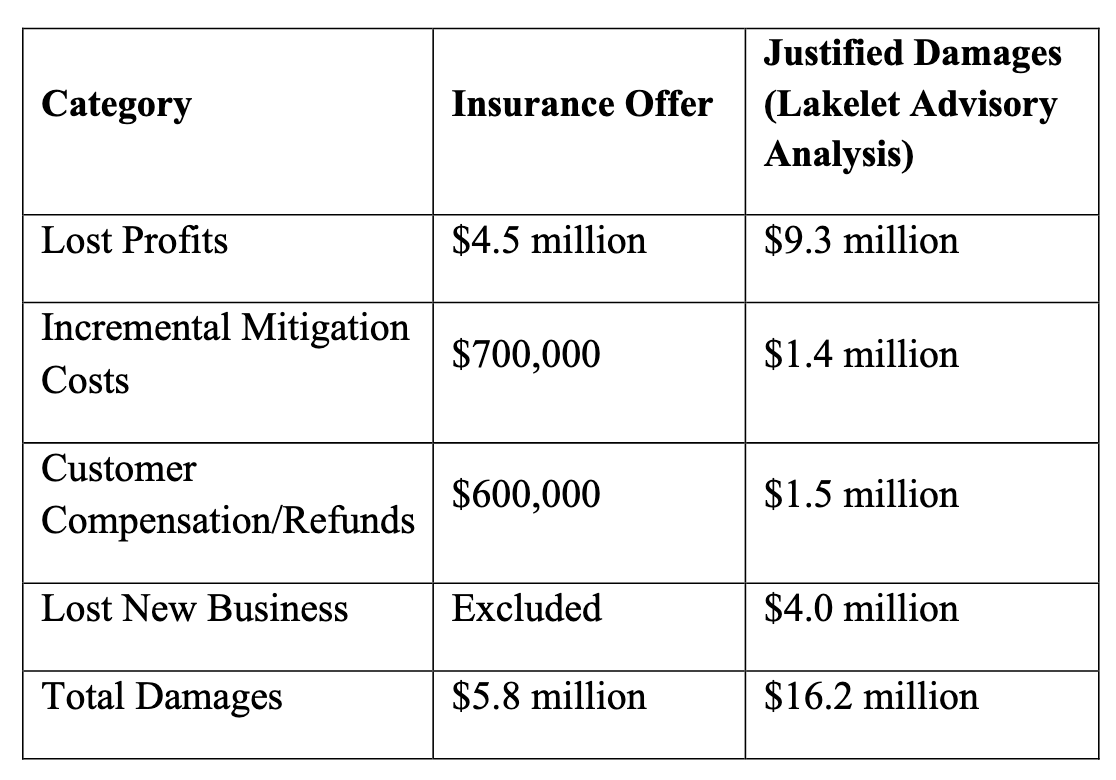
  • Lost Profits: $9.3 million

  • Incremental Mitigation Costs: $1.4 million

  • Customer Compensation/Refunds: $1.5 million

  • Lost New Business: $4.0 million

  • Total Damages Quantified: $16.2 million

Outcome:

Our expert testimony supported the plaintiff’s claim, leading to a settlement of $13.6 million.

Exhibit 1: Projected vs. Actual Revenue:

Insurance Offer vs. Justified Damages:

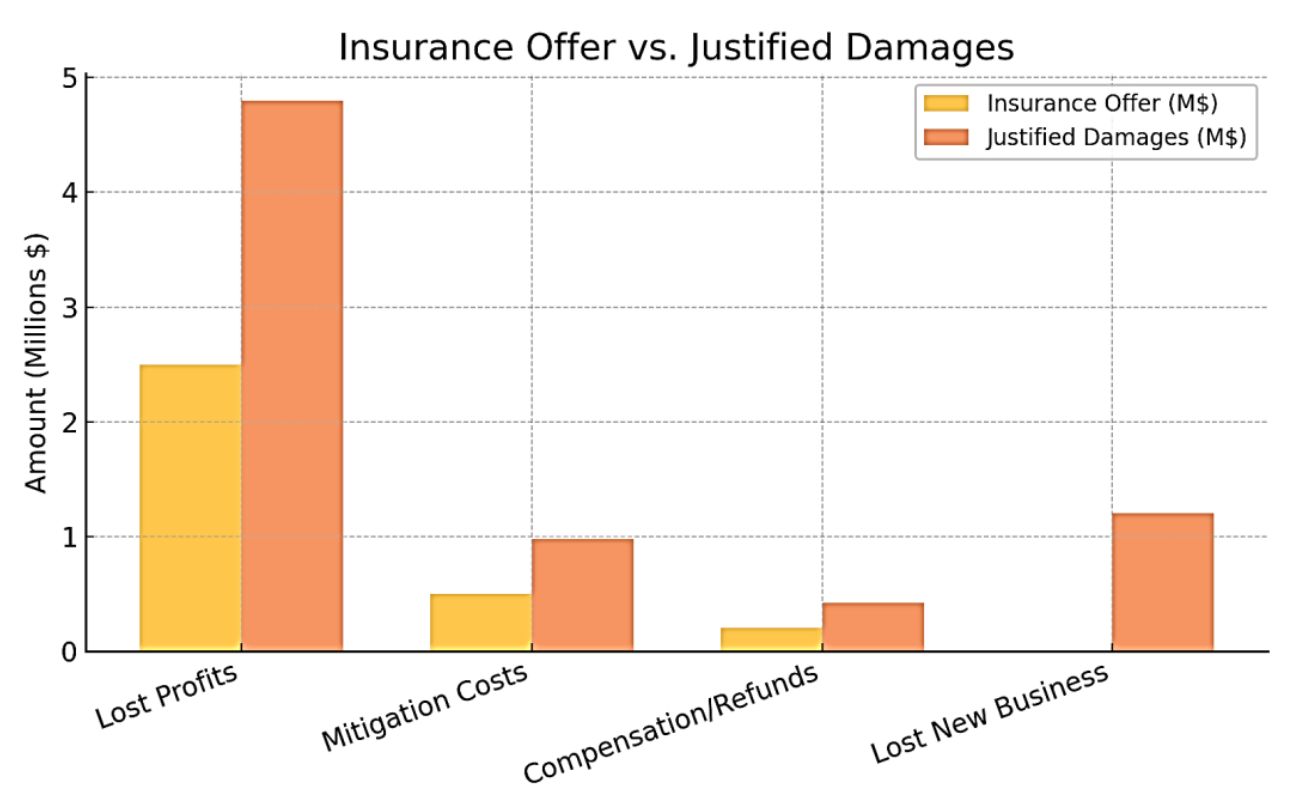
As part of the litigation process, TechPro Systems, Inc. filed a business interruption and property damage claim with its insurance provider. The initial insurance settlement offer was deemed insufficient compared to the true economic impact of the disaster. Our analysis provided a detailed rebuttal with substantiated financial modeling, leading to a favorable settlement.

Our evidence-based analysis nearly tripled the recognized damages from the insurance provider’s initial offer. This detailed quantification of downtime, client attrition, and lost future contracts proved essential in negotiating the final settlement.

Exhibit 2: Insurance Offer vs. Justified Damages:

Final Settlement Outcome:

After arbitration, the company received approximately 84% of the damages quantified by Lakelet Advisory Group, resulting in a final recovery of approximately $13.6 million (84% of $16.2 million).

Economic Loss Methodologies Utilized:

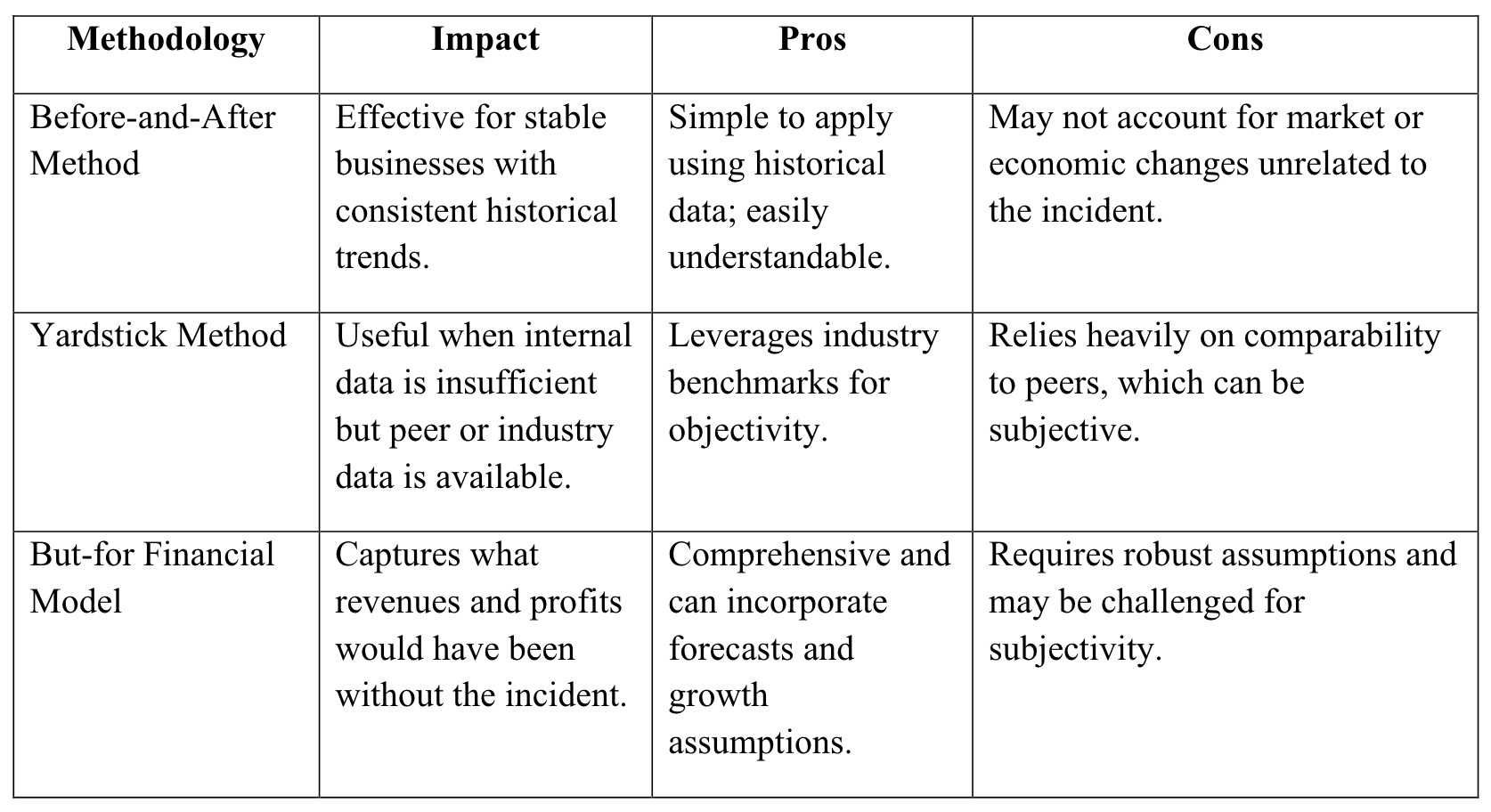
The following economic loss methodologies were considered and could have been utilized to quantifydamages resulting from the disaster:

  • Before-and-After Method – Compares the company’s actual performance post-event to its historical performance prior to the incident, isolating the financial impact of the disruption.

  • Yardstick Method – Uses comparable companies or industry benchmarks to estimate what the company’s performance would have been but for the incident.

  • But-for Financial Model – Constructs a projection of revenue and profits assuming the event had not occurred, and contrasts this with actual results to determine lost profits.

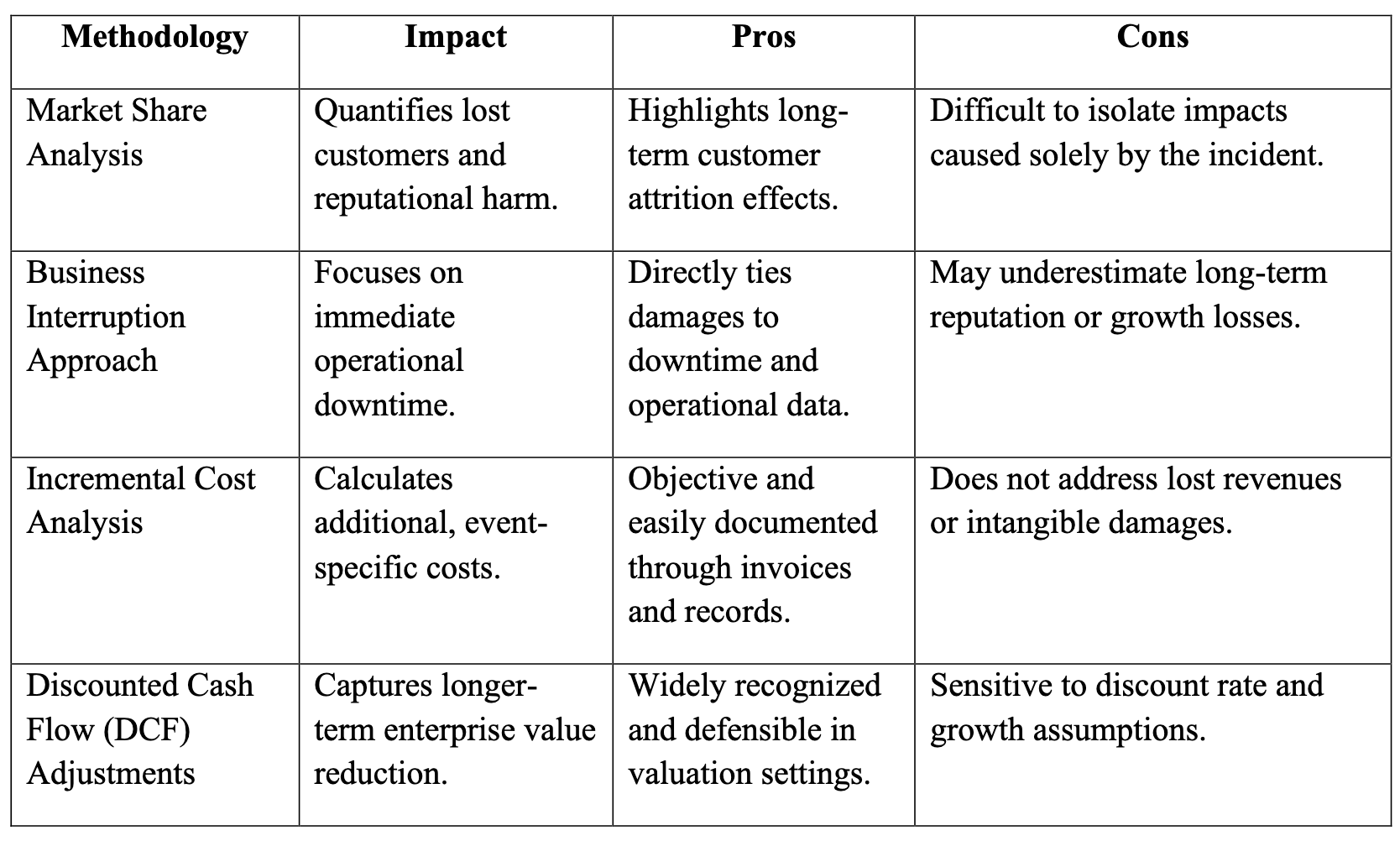
  • Market Share Analysis – Evaluates lost customers or market share due to reputational harm and quantifies the future revenue impact over the recovery period.

  • Business Interruption Approach – Estimates the period of full and partial operational downtime and applies margins to calculate lost income during that period.

  • Incremental Cost Analysis – Quantifies additional costs incurred for mitigation, temporary services, or client retention that would not have been incurred otherwise.

  • Discounted Cash Flow (DCF) Adjustments – Applies discounted cash flow techniques to quantify longer-term losses or reduced enterprise value due to the incident.

Methodology Impact Analysis:

The table below summarizes the potential impact of each economic loss methodology, along with its key pros and cons.

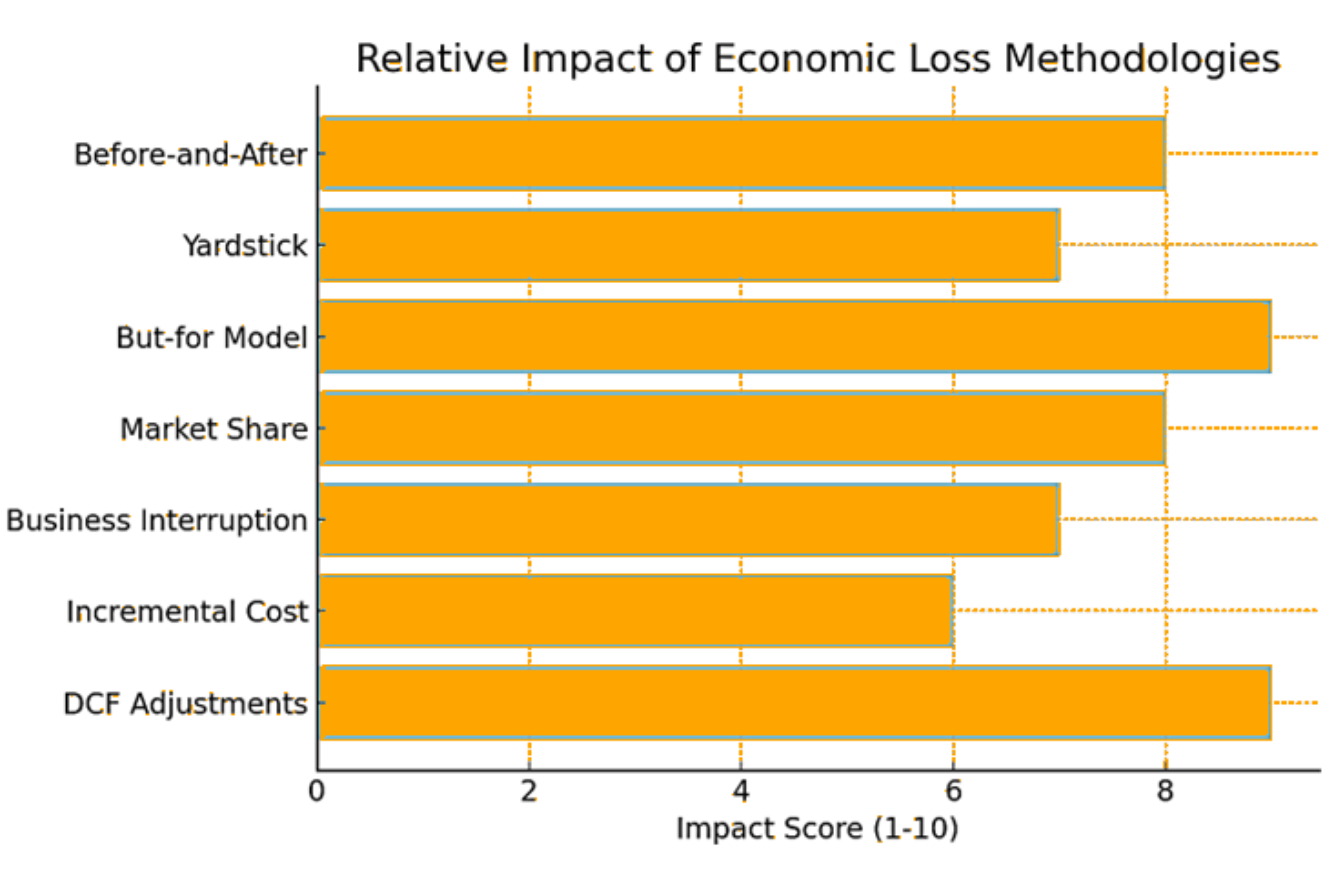
Exhibit 3: Impact of Economic Loss Methodologies:

Conclusion:

The But-for Financial Model and Discounted Cash Flow (DCF) Adjustments proved to be the most impactful methodologies in substantiating the claim and reaching a favorable settlement. These approaches effectively quantified both the immediate loss of profits and the longer-term effects on enterprise value. By incorporating client attrition and business interruption data, the analysis delivered a comprehensive assessment of both short-term disruptions and lasting financial harm. Ultimately, this integrated, multi-method strategy—underpinned by robust financial modeling—enabled the company to recover 84% of the total quantified damages, amounting to $13.6 million out of $16.2 million. This outcome underscores the critical importance of leveraging a tailored combination of loss quantification techniques, aligned with the unique circumstances of each case.

The Role of a Business Valuator in Product Liability

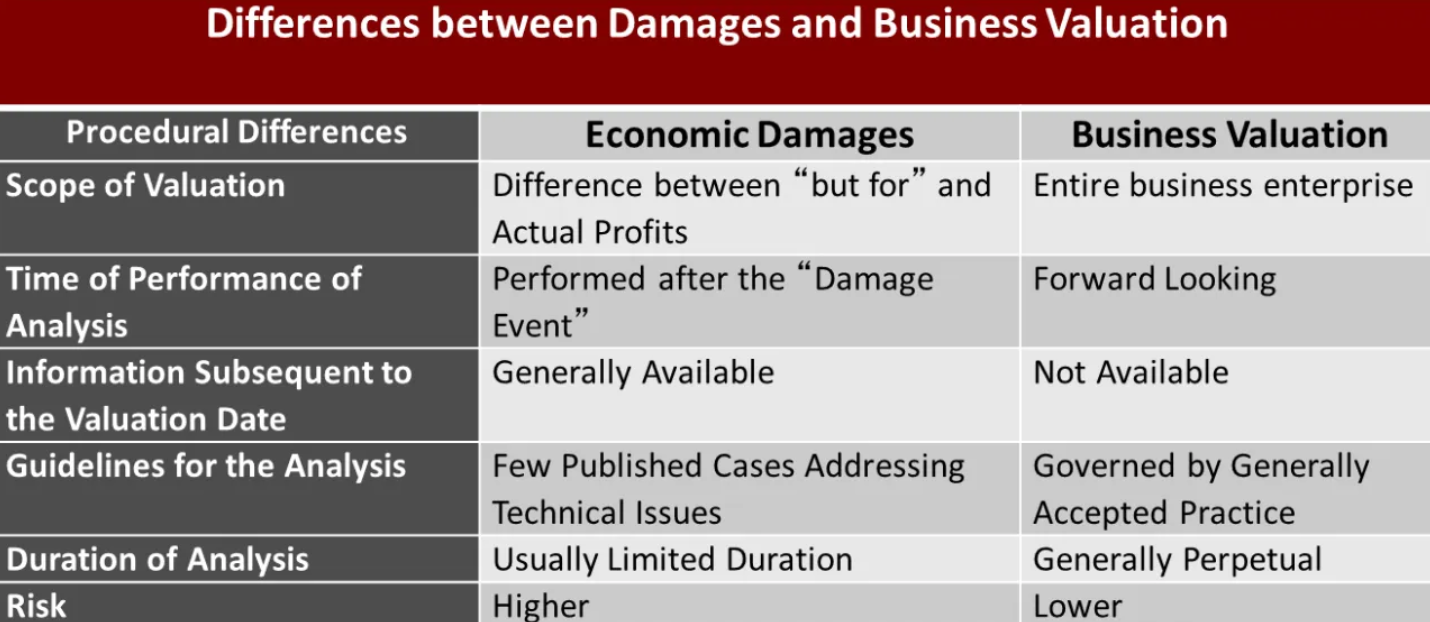
It stands to reason that product liability actions are quite complex, and establishing legal fault and economic loss often requires the assistance and testimony of experts. Aside from the legal perspective, product liability includes elements of finance, business valuations, forensics, determination of economic losses, accounting, economics, management, and other disciplines. It is the job of a valuation expert to measure economic loss. Doing so requires a thorough examination, including a careful analysis of pertinent operational, financial, industrial, and economic data. A valuation expert’s responsibility is to measure the value by which all parties are made “whole” after the event.

Not all valuation professionals are created equal. Every economic loss profile is unique and therefore requires an experienced and knowledgeable professional to give an independent, well-reasoned, and well-supported opinion.

At Lakelet Advisory Group (LAG), our experts are highly experienced and credentialed. We offer both valuation and forensic accounting services, enabling us to ensure we have the best information available and can deliver the most accurate measure of economic loss based on that information. Our team has the ability to examine large amounts of complicated data in an efficient and cost-effective manner, and report solid conclusions supported by careful analyses.

Merchant Cash Advances: Legal Landscape, Bankruptcy Recovery, and Litigation Support

A fintech platform reported default rates of 8.5% to 10.5% among MCA borrowers. This gives us a rough idea of accounts that go into default. As a benchmark, traditional business loan delinquency stands much lower—at 1.16%.

A small to mid-size entity in bankruptcy averages ~3 MCAs per filing.

Lakelet Advisory Group’s Service for MCAs.

Lakelet Advisory Group helps MCA providers protect and maximize recovery in distressed situations. We analyze contracts for recharacterization risks, usury exposure, and UCC perfection to strengthen legal standing. Our forensic team traces receivable flows, identifies preference or fraudulent transfers, and models expected recovery under Chapter 7 or Chapter 11. In litigation, we support counsel with expert testimony, financial exhibits, and loss quantification, while also developing workout strategies that preserve cash flow outside of bankruptcy.

Beyond individual cases, we conduct portfolio risk reviews, highlight exposure to stacking and industry concentrations, and provide regulatory insights shaping MCA enforceability. With deep experience in valuation, bankruptcy, and financial forensics, Lakelet Advisory Group delivers clarity, defensibility, and actionable strategies—helping MCA providers improve collectibility and mitigate risk.

Legal Characterization and Direction of MCAs

The legal treatment of MCAs in bankruptcy depends on whether the transaction is deemed a “true sale” of receivables or a disguised loan. Courts examine the substance over form, with key factors including:

· Whether repayment is contingent on actual receivables

· The presence of a fixed repayment schedule

· Recourse against the merchant if sales decline

· The use of personal guarantees and confessions of judgment (COJs)

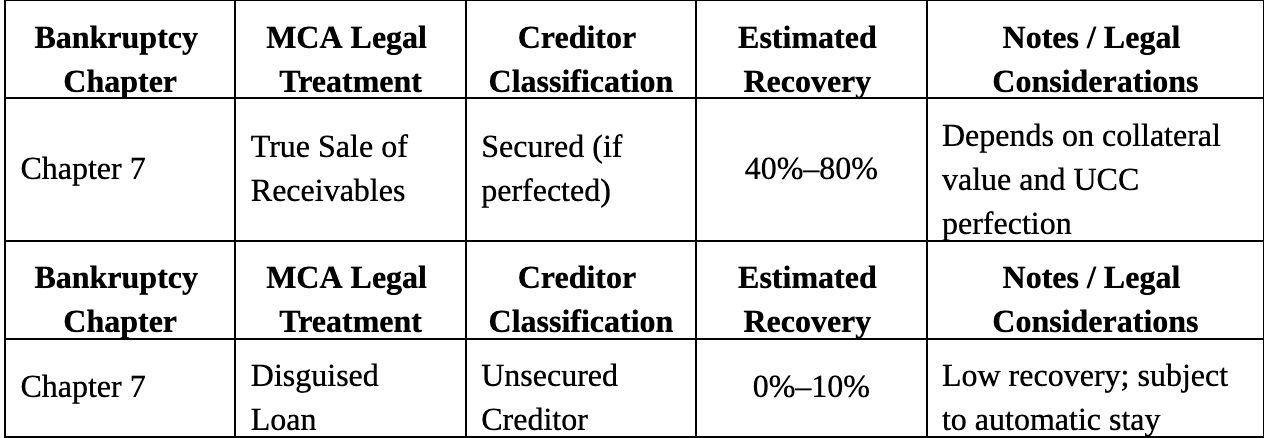
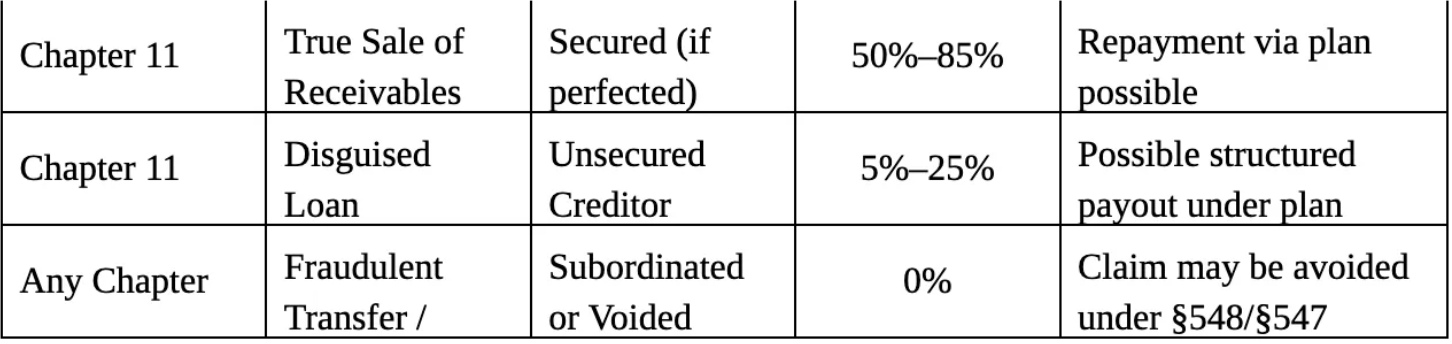
If classified as a true sale and secured with a perfected UCC filing, the MCA provider may recover directly from receivables and avoid inclusion in the bankruptcy estate under §541 of the Bankruptcy Code. However, in most cases, courts have found MCA agreements to be loans, rendering them unsecured claims subject to the automatic stay under §362 and substantially reducing recovery prospects. Additionally, aggressive pre-petition collections can be clawed back as preferences (§547) or fraudulent transfers (§548).

Market Trends, Regulatory Actions, and Case Outcomes

  • Market Scale & Growth: Published market-size estimates diverge, but all show rapid growth. Allied Market Research pegs 2023 global MCA volume at $17.9B with a forecast to $32.7B by 2032 (CAGR ~7.2%).[1] Some trackers report even steeper trajectories, but methodologies vary.[2]

  • Bankruptcy courts are increasingly scrutinizing “true sale” claims. Recent S.D.N.Y. rulings (e.g., In re J.P.R. Mechanical, Inc.) recharacterized MCA agreements as loans and allowed the clawback of >$3M in pre-petition payments, despite “sale of receivables” labels, highlighting preference exposure when reconciliation is weak or term/recourse looks loan-like.[3]

  • Small-business demand context. Federal Reserve Small Business Credit Survey shows firms’ applications for loans/LOCs/MCAs dipped from 40% to 37% (2022→2023), with approval rates largely unchanged owners continue turning to non-bank options when banks tighten.[4]

  • There is no widely published data on the average number of MCAs per bankruptcy, but “most small business debtors under Subchapter V of Chapter 11 have at least one merchant cash advance creditor.”[5] For businesses filing for Chapter 11 to have more MCA obligations stacked on top of each other, especially when financing, has become a repeated, urgent solution.

MCA Recovery Outcomes by Bankruptcy Chapter and Legal Classification


In distressed scenarios or bankruptcy, MCA providers often experience sharply negative returns. For example, on a $100,000 advance with a contractual repayment of $135,000, a 10% recovery over 12 months equates to a -90% ROI. Breakeven occurs only with full recovery of the advanced amount, not including profit. Typical distressed recoveries for recharacterized MCAs are under 20%, especially in Chapter 7 liquidations.

Why This Matters to Recovery Outcomes

If an MCA is recharacterized as a loan in bankruptcy, the claim is typically unsecured, subject to the automatic stay, and prior collections can be avoided as preferences or fraudulent transfers, slashing recoveries vs. “true sale” treatment with perfected security interests. Enforcement actions and COJ limits increase the odds that aggressive pre-petition debits are challenged and clawed back, or that contractual terms are voided, directly affecting net ROI.[6]

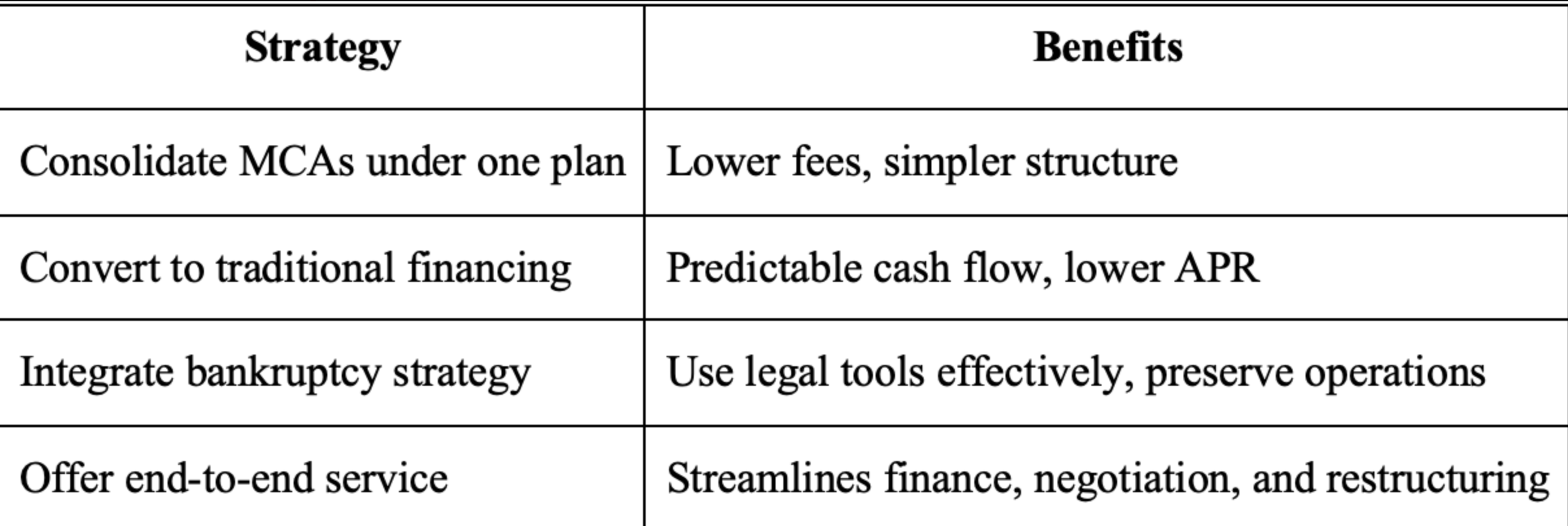
Adding Value by Consolidating Services

If your firm can consolidate services and address MCAs strategically, you can offer distinct advantages:

1. Cost Reduction

· Simplify servicing: Consolidating MCAs into a single structured arrangement (e.g., a term loan or manageable repayment plan) can lower administrative overhead and eliminate the high factor fees—typically 1.1× to 1.5× the advance.[7]

· Reduce expensive stacking: Prevent businesses from entering repeated MCA cycles that dramatically increase costs via repetitive high repayments.[8]

2. Risk Mitigation

· Improved cash flow predictability: Replacing daily or weekly holdbacks with structured repayments reduces volatility and helps clients budget more effectively.[9]

· Avoid legal pitfalls: MCAs often come with aggressive terms like ACH withdrawals, personal guarantees, and UCC filings. Consolidation into more standard, transparent terms lowers exposure to defaults and potential litigation.[10]

3. Enhanced Negotiating Leverage

· In bankruptcy contexts, you can use tools like automatic stay, prioritizing claims, or negotiating secured vs unsecured status to streamline resolution. Consolidation supports such strategic maneuvering.[11]

· Professional representation: Your integrated services (valuation, restructuring, negotiation) give the client a stronger, more credible position with MCA funders and the court.

Lakelet Advisory Group: Litigation Support That Moves the Needle

Lakelet Advisory Group helps determine what’s collectible, what’s avoidable, and what’s negotiable in MCA disputes. Here’s how we add value (and why it benefits your case):

  • Deal Characterization & UCC Perfection Review: We test MCA terms against the three core factors courts scrutinize (contingency on receivables, fixed terms, and recourse) and verify perfection gaps to argue secured “true sale” when supportable or to pressure concessions when it isn’t. This can shift a claim from unsecured to secured (or vice versa), materially changing expected recoveries.

  • Preference/Fraudulent-Transfer Analytics: We reconstruct payment flows and timing to quantify §547/§548 exposure; critical when rulings like J.P.R. Mechanical show millions can be clawed back. Quantifying that exposure tightens settlement ranges and informs plan negotiations.[12]

  • Forensic Receivables Tracing: We map pre- and post-petition receivable streams, identify carve-outs, and surface third-party payment processors or lockbox gaps, creating actionable leads for turnover demands or adequate-protection negotiations.

  • Expert Support & Testimony: We translate industry mechanics (reconciliation practices, factor rates vs. APR optics, COJ usage) for the court, aligning with evolving case law to strengthen usury defenses (when appropriate) or to support recharacterization arguments.[13]

  • Plan & Workout Modeling: We build scenario models (sale vs. loan characterization; secured vs. unsecured; preference outcomes) to set settlement anchors and accelerate resolution, improving time-to-cash vs. protracted litigation.

The MCA industry remains a fast-growing alternative finance sector, but legal recharacterization risks in bankruptcy substantially impact recoveries. At Lakelet Advisory Group, we provide effective litigation support and proactive restructuring to ensure true sale status and perfected security interests. We have a proven track record of materially improving collection prospects.

[1] Allied Market Research. Merchant Cash Advance Market. https://www.alliedmarketresearch.com/merchant-cash-advance-market-A323338

[2] Global Growth Insights. Merchant Cash Advance Market Report. https://www.globalgrowthinsights.com/market-reports/merchant-cash-advance-market-102198

[3] Eversheds Sutherland. Preference Pitfalls for Merchant Cash Advances: Lessons from the Southern District of New York. https://www.eversheds-sutherland.com/en/global/insights/preference-pitfalls-for-merchant-cash-advances-lessons-from-the-southern-district-of-new-york

[4] Federal Reserve Banks. (2024). 2024 Report on Employer Firms: Findings from the 2023 Small Business Credit Survey. https://doi.org/10.55350/sbcs-20240307

[5] McConville Considine Cooman & Morin, P.C. The Dangers of a Merchant Cash Advance. https://www.mccmlaw.com/news-and-articles/articles/the-dangers-of-a-merchant-cash-advance

[6] Federal Trade Commission. Court Enters $203 Million Judgment in FTC Case Against Merchant Cash Advance Operator Jonathan Braun. https://www.ftc.gov/news-events/news/press-releases/2024/02/court-enters-203-million-judgment-ftc-case-against-merchant-cash-advance-operator-jonathan-braun

[7] Attorney-NewYork.com. Can You File Bankruptcy on a Merchant Cash Advance?. https://attorney-newyork.com/mca-debt/merchant-cash-advance-can-you-file-bankruptcy

[8] New Frontier Funding. How to Get Out of MCA Loans: A Comprehensive Guide. https://newfrontierfunding.com/how-to-get-out-of-mca-loans

[9] Rho Editorial Team. What is an MCA? Merchant Cash Advances for Startups. Rho (May 27, 2025). https://www.rho.co/blog/merchant-cash-advances-mca

[10] United States Bankruptcy Court, Northern District of Florida. Merchant Cash Advance Claims in Bankruptcy (by Caitlyn Coates & Michael Markham), April 2025. https://www.flnb.uscourts.gov/sites/flnb/files/2025-04_NSL_Guest_MerchantCashAdvance.pdf

[11] Coates, Caitlyn & Markham, Michael. Merchant Cash Advance Claims in Bankruptcy. United States Bankruptcy Court, Northern District of Florida (April 2025). https://www.flnb.uscourts.gov/sites/flnb/files/2025-04_NSL_Guest_MerchantCashAdvance.pdf

[12] Allied Market Research. Merchant Cash Advance Market. https://www.alliedmarketresearch.com/merchant-cash-advance-market-A323338

[13] New York Courts. Principis Capital, LLC v. I Do, Inc. 160 A.D.3d 501 (2018). https://www.nycourts.gov/REPORTER/3dseries/2018/2018_01645.htm