There are many different ways of selling a company. Choosing a method may depend on the type of business, the goals of the seller, or the preferences of the buyer. Here are some common methods for selling a company:
Sale of the Company’s Shares: This is when the seller transfers all or some of the ownership shares of the company to the buyer, who then becomes the new owner of the company. This method is simpler and faster than a sale of assets, as it does not require the transfer of individual assets and liabilities. However, it also exposes the buyer to more risks, such as hidden liabilities, tax issues, or legal disputes.
Pros
Cons
Risks: Buyer assumes existing liabilities, potential legal issues, and hidden debts
Limited Control: Limited control over individual assets and liabilities
Sale of the Company’s Assets: This is when the seller sells the individual assets and liabilities of the company to the buyer, who then uses them to operate a new or existing business. This method gives the buyer more flexibility and control over what they are acquiring and reduces the risks of inheriting unwanted liabilities or problems. However, it also involves more complexity and costs, as it requires the valuation and transfer of each asset and liability and may trigger tax consequences for both parties.
Pros
Flexibility: Buyer can pick and choose specific assets, avoiding unwanted liabilities
Clear Valuation: Easier valuation of individual assets
Cons
Merger or Acquisition: This is when two or more companies combine their businesses into one entity, either by merging their shares or assets, or by one company buying out another. This method can create synergies and economies of scale, increase market share and competitiveness, and diversify products and services. However, it also involves challenges such as integration issues, cultural differences, regulatory approvals, and potential conflicts among stakeholders.
Pros
Synergies: Can create synergies, increase market share, and diversify products/services
Competitive Edge: Enhances competitiveness and market presence
Cons
Challenges: Integration challenges, regulatory approvals, and potential stakeholder conflicts
Cultural Differences: Differences in organizational culture can lead to challenges
Management Buyout: This is when the existing management team of a company buys out the ownership shares from the current owner, usually with the help of external financing. This method can preserve the continuity and culture of the business, motivate, and reward the management team, and avoid disruption to customers and suppliers. However, it also requires a high level of trust and cooperation between the owner and the management team, a fair valuation of the business, and a feasible financing plan.
Pros
Cons
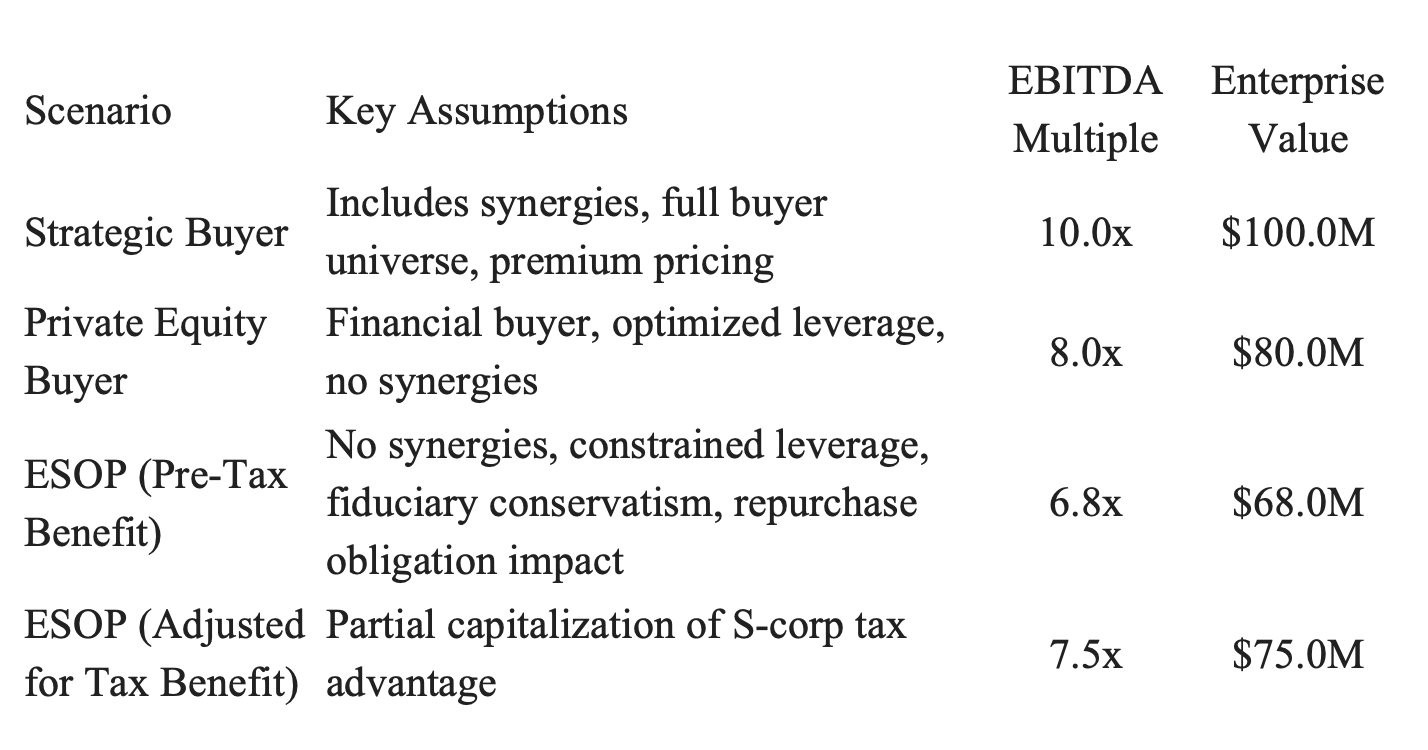
Employee Stock Ownership Plan (ESOP): This is when a company sets up a trust that buys and holds its shares for the benefit of its employees, who then become partial owners of the business. This method can provide tax advantages for both the seller and the company, increase employee loyalty and productivity, and facilitate succession planning. However, it also entails administrative costs and complexity, fiduciary responsibilities for the trustees, and dilution of ownership for existing shareholders.
Pros
Cons
Strategic Sale: This involves selling your company to another company in the same industry. Strategic buyers are often willing to pay a premium because they see synergies and opportunities for growth or cost savings by acquiring your business. These buyers could be competitors, suppliers, or companies in related industries.
Pros
Premium Pricing: Strategic buyers often pay a premium due to perceived synergies
Industry Expertise: Buyers understand the industry, which can lead to smoother transitions
Cons
Financial Sale: Private equity firms or investment groups may be interested in acquiring your company purely for its financial returns. They often buy companies with the intention of improving their performance and selling them at a higher valuation in the future.
Pros
Cons
IPO (Initial Public Offering): If your company is large enough and meets the regulatory requirements, you can take it public by offering shares on a stock exchange. This allows you to raise capital from public investors and gives you liquidity.
Pros
Cons
Brokerage Services: You can hire a business broker or investment banker to help you find potential buyers and negotiate the sale on your behalf. These professionals can provide valuable guidance throughout the process.
Pros
Cons
Cost: Involves fees and commissions, affecting overall proceeds
Dependency: Relies on the broker’s effectiveness in finding suitable buyers
Online Marketplaces: There are online platforms and marketplaces where you can list your business for sale. These can be effective for smaller businesses and startups.
Pros
Cons
Quality Control: Quality of buyers may vary; careful screening is necessary
Limited Scope: May not be suitable for larger, more complex businesses
Direct Sale: You can also approach potential buyers directly, especially if you already have contacts or relationships in your industry. This approach requires careful negotiation and due diligence.
Pros
Cons
Each method has its own advantages and challenges. It is essential to carefully evaluate these factors and seek professional advice before making a decision. These are some of the most common methods of selling a company, but there may be other options depending on your specific situation. You should consult with your team of advisors before deciding on the best method for your business.